Reference:
Neuman Aluminium Strangpresswerk
Comprehensive Electrification and Modernization of Key Thermal Process Areas at the Marktl Extrusion Plant in Lower Austria
Together with Neuman Aluminium Strangpresswerk GmbH, extrutec implemented a comprehensive modernization project at the company's extrusion plant in Marktl, Austria. The objective was to replace fossil fuels throughout the thermal process chain wherever possible while simultaneously improving energy efficiency, process stability, automation, and long-term sustainability.
Project Requirements:
The aluminium extrusion industry faces the challenge of making energy-intensive processes more sustainable without compromising productivity, quality, or operational reliability. At Neuman Aluminium, the electrification of key production processes forms part of a long-term strategy to reduce fossil fuel consumption and significantly lower the company’s carbon footprint.
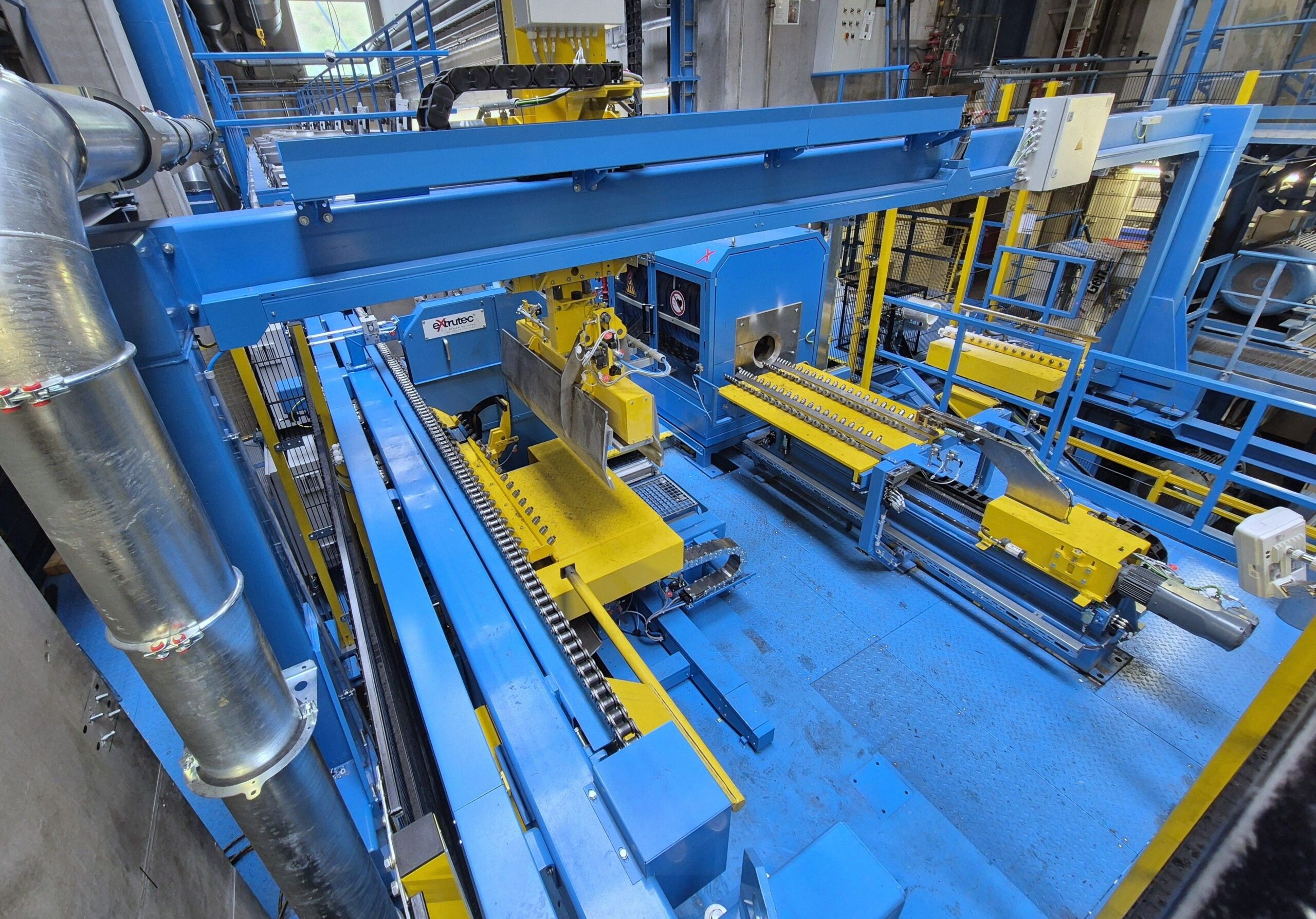
The project included the modernization of several process areas in parallel: billet preheating at Press 2, the complete reconstruction of the preheating line at Press 3, and the electrification of the ageing department. One of the major challenges was executing these extensive modifications with minimal impact on ongoing production. This required precise planning, close coordination of installation and commissioning activities, and seamless integration into the existing plant infrastructure.
Scope of Supply:
The extrutec scope included a fully integrated process solution for the electrification of key extrusion production processes:
- Two electrically heated High Convection Furnaces (EHKO)
- Stand-alone Induction Billet Heater (IBH)
- Hot Saw
- Energy-efficient cross-transfer systems
- Six electrically heated ageing furnaces with shuttle system
- Automation and process control system integration
- Energy Saving Unit (ESU) for utilizing external waste heat sources
- Integration of all equipment into the existing production and material handling infrastructure
Implementation – Press 2 Preheating Line:
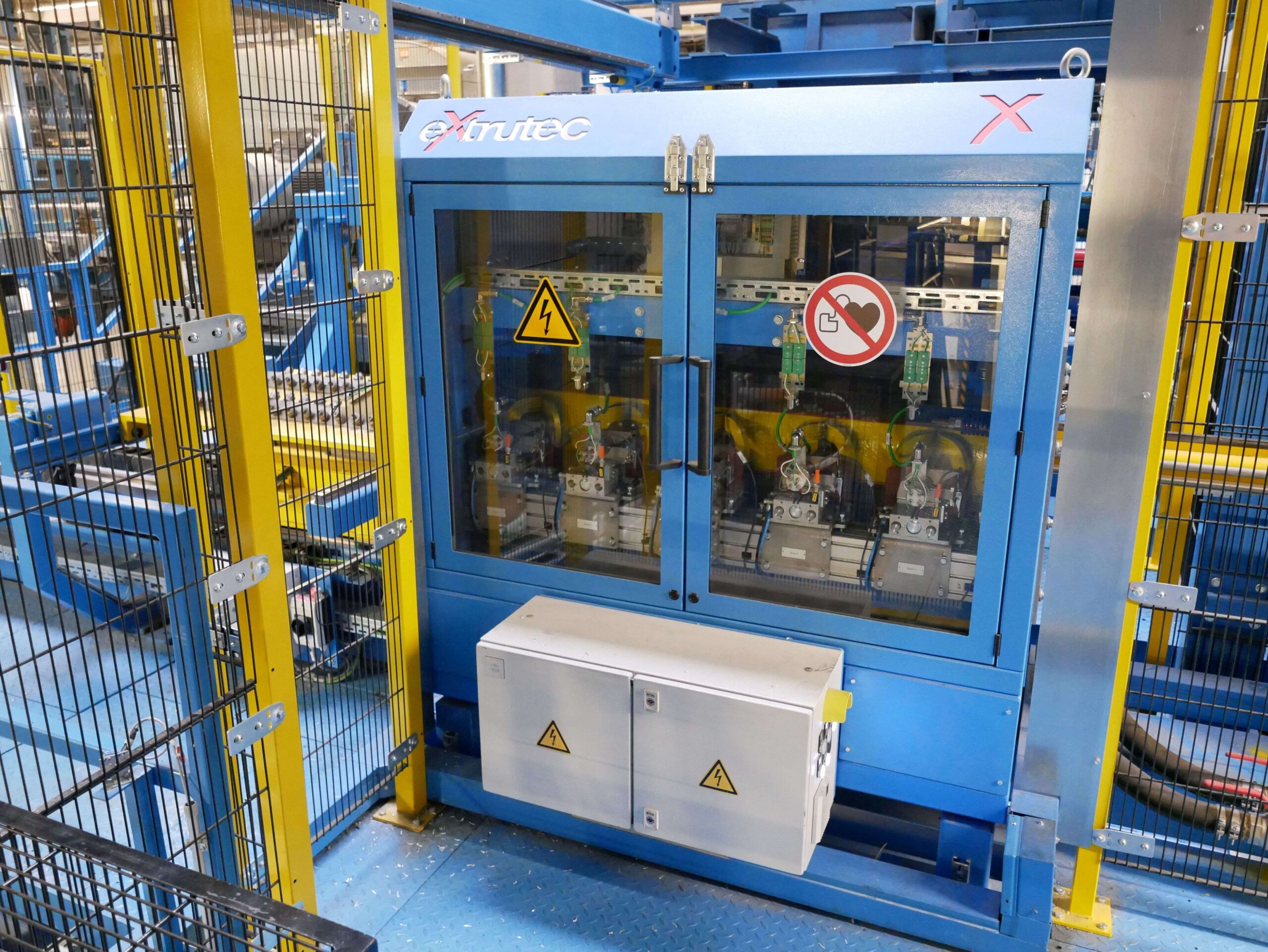
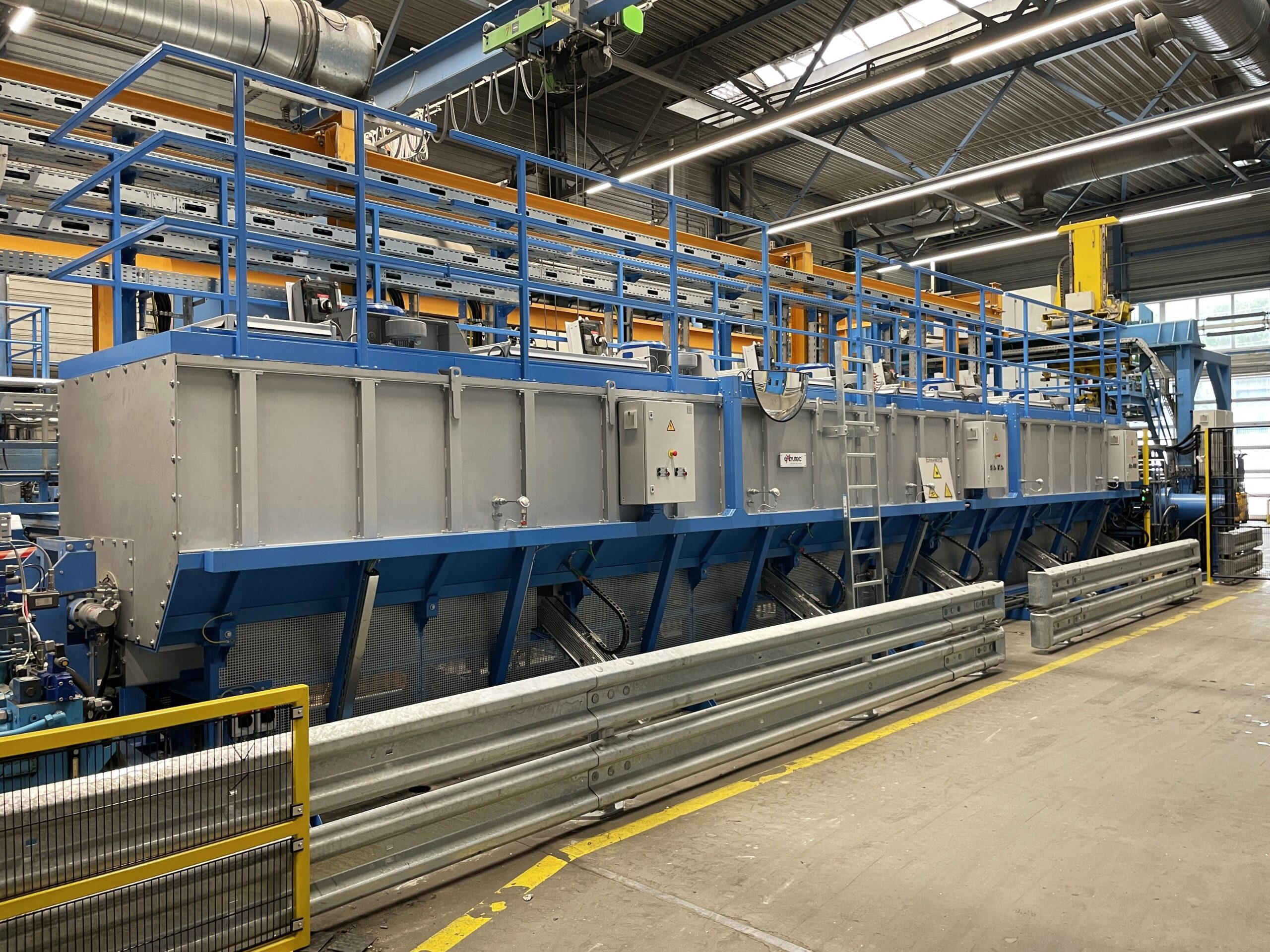
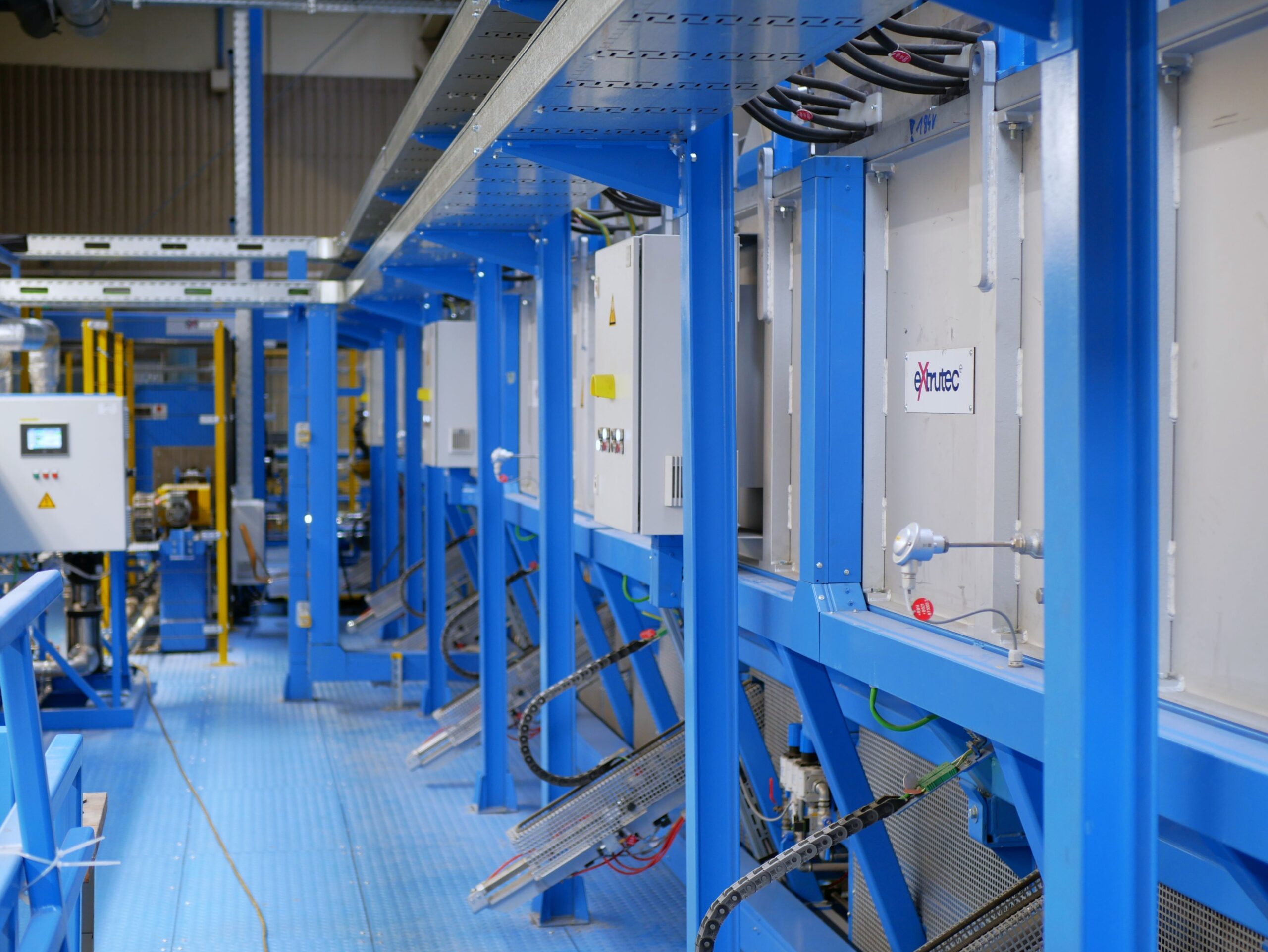
At Press 2, the existing gas-fired preheating furnace was replaced by an electrically heated High Convection Furnace. The new system was integrated into the existing layout between the billet magazine and the hot shear.
The performance requirements were particularly demanding. Within a distance of only approximately ten meters, the billets must be heated from ambient temperature to more than 360°C. In addition, rapid reheating after the shearing process is required to compensate for cooling losses and maintain a throughput of up to 5,000 kg/h.
The electrically heated High Convection Furnace provides precise and homogeneous billet heating. High air velocities, optimized heat transfer, and excellent insulation minimize thermal losses while significantly improving process stability. At the same time, the direct use of fossil fuels for billet heating has been eliminated.
Implementation – Press 3 Preheating Line:
The entire preheating line for Press 3 was newly designed and installed. The system consists of an electrically heated High Convection Furnace, a hot saw, and a stand-alone Induction Billet Heater.
Due to limited available space, the complete equipment package was installed on an elevated steel platform while maintaining integration with the existing billet handling infrastructure.
The induction billet heater delivers extremely high energy density, enabling cycle times of less than 46 seconds per billet while maintaining highly accurate temperature profiles. An Energy Saving Unit further improves efficiency by recovering and utilizing external heat sources, such as waste heat generated by the press hydraulics.
Implementation – Ageing Department:
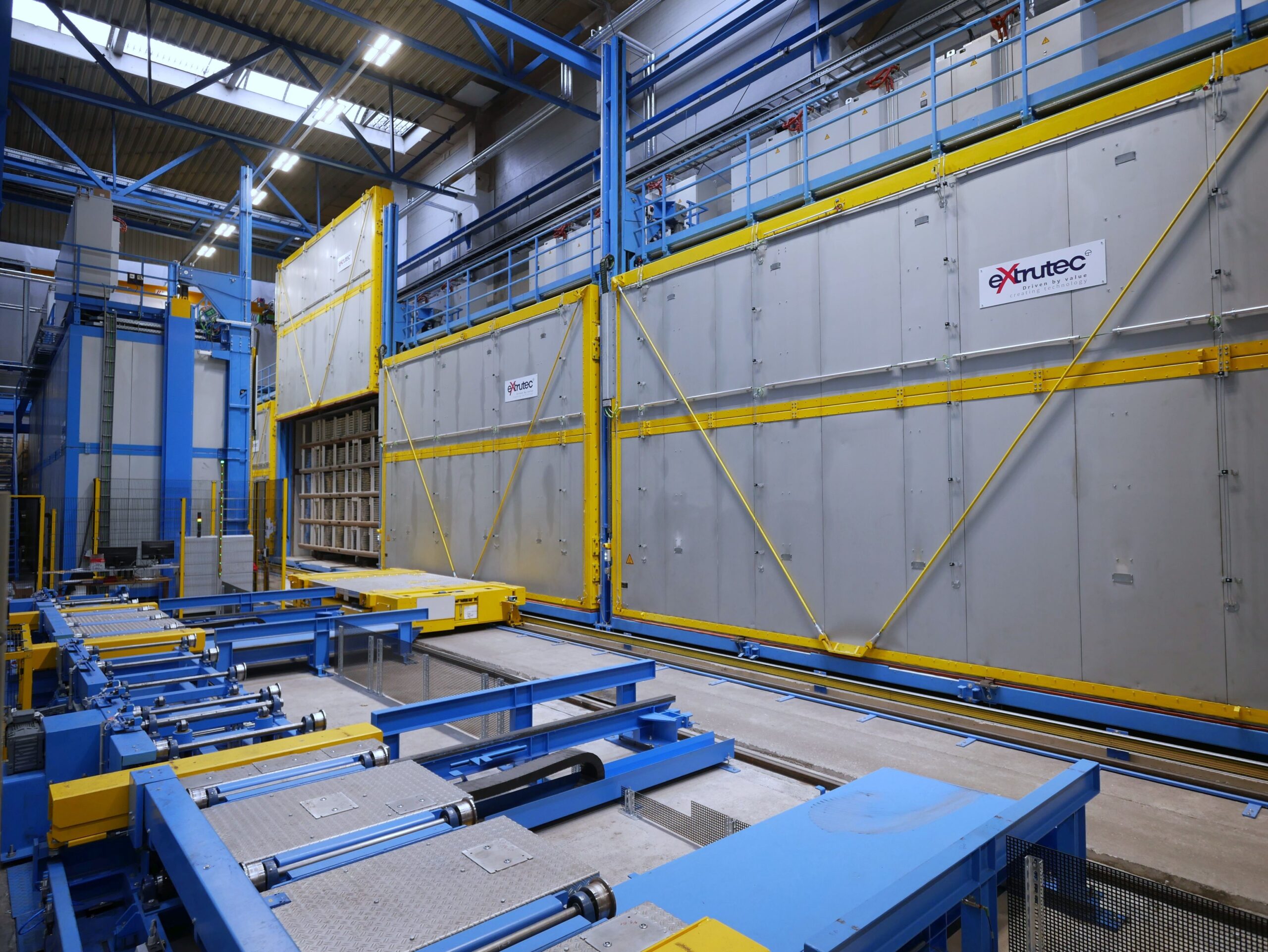
Another key element of the project was the complete redesign of the ageing process. The previous gas-fired continuous ageing furnace system was replaced by six electrically heated batch ageing furnaces equipped with a shuttle system.
This concept enables highly flexible and demand-oriented furnace utilization while improving overall energy efficiency by minimizing unused furnace volume. The ageing department now operates fully automatically, from loading and handling to unloading of finished products. The entire process is integrated into the plant-wide control system.
Results:
By consistently electrifying key process areas, Neuman Aluminium has taken a significant step towards decarbonization and long-term sustainability. Approximately 94% of previously gas-heated systems have been replaced by electrically operated technologies.
Today, approximately 7,500 MWh of renewable electricity replaces around 10,050 MWh of natural gas consumption. As a result, overall energy demand has been reduced by approximately one third while annual CO₂ emissions have been lowered by around 2,020 tonnes.
The project demonstrates that electrification involves far more than simply replacing one energy source with another. Significant improvements can only be achieved through the combination of efficient furnace technology, intelligent energy management, precise temperature control, advanced automation, and comprehensive system integration.
The modernization project at Neuman Aluminium is an outstanding example of next-generation sustainable extrusion technology: electric, energy-efficient, highly stable, and designed to meet the future requirements of aluminium extrusion plants worldwide.
For a detailed list of our reference plants and projects, please contact our sales manager Mr. Ulrich Bucher bucher@extrutec-gmbh.de
Neuigkeiten
Messen